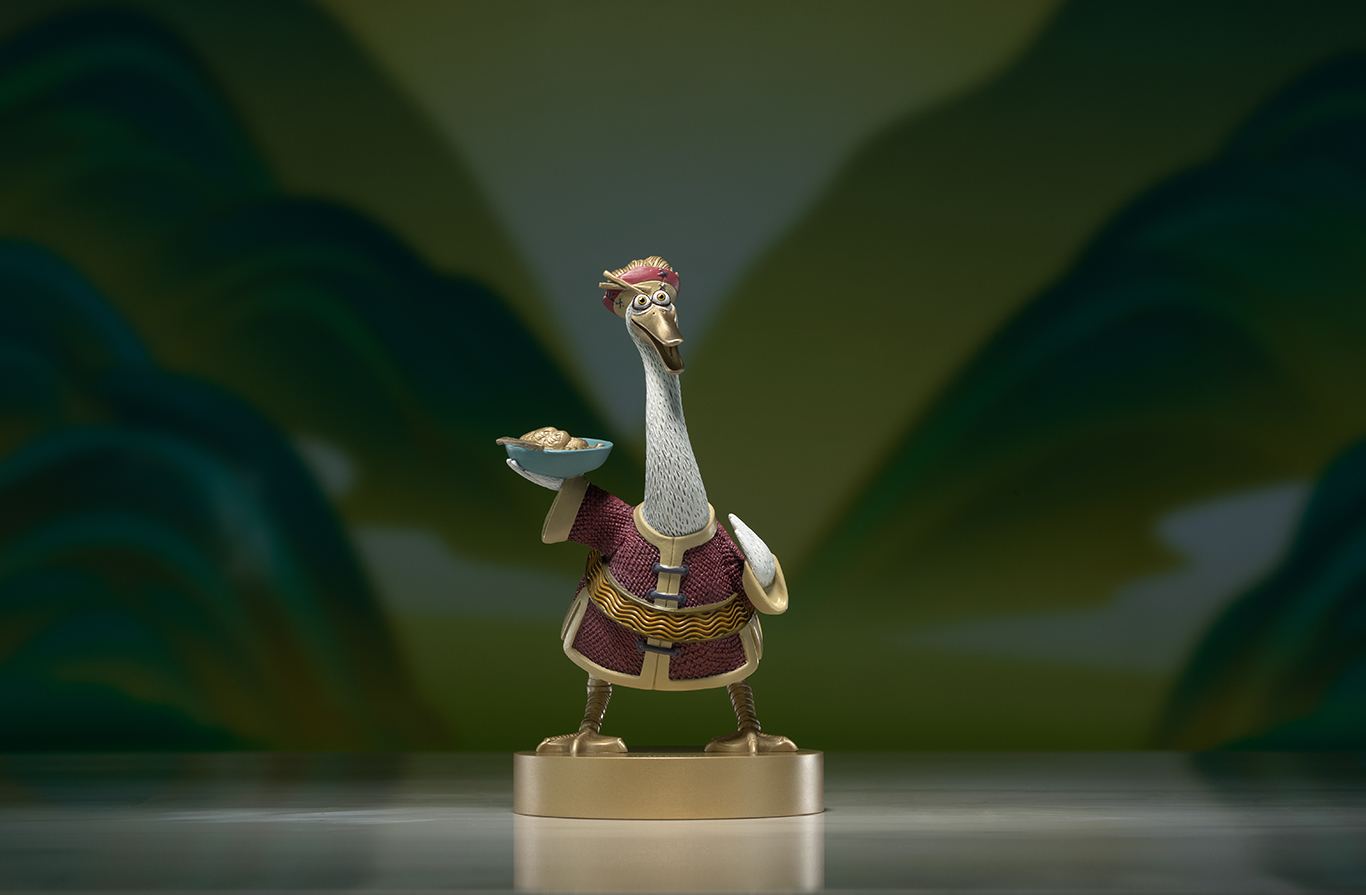
He’s just a goose. A goose who sells noodles and wears a hat shaped like a bowl. Honestly, when you first see Mr Ping Kung Fu Panda fans might just write him off as the comic relief. He’s the anxious dad. The guy obsessed with tofu and secret ingredients. But if you actually sit down and look at the emotional architecture of the DreamWorks series, everything—literally everything—collapses without him.
James Hong, the legendary actor who voices him, brings this frantic yet grounded energy that makes Ping feel more real than the dragons or the spirits. He’s not a kung fu master. He can’t throw a punch. Yet, he’s the one who taught Po how to actually be the Dragon Warrior.
The Secret Ingredient is... Nothing?
Everyone remembers the "Secret Ingredient Soup" scene. It’s the turning point of the first movie. Po is depressed. He thinks he’s a failure because the Dragon Scroll is blank. Then Mr. Ping drops the truth bomb: "To make something special, you just have to believe it’s special."
That’s not just a cute line about cooking. It’s the entire philosophy of the franchise. While Shifu was busy trying to force Po into a mold of a traditional warrior, Ping was just being a dad. He accepted Po exactly as he was—fat, hungry, and clumsy. In a world of high-stakes prophecy and ancient magic, Ping represents the power of radical acceptance. He didn’t need Po to be a hero; he just needed him to be fed.
You've probably noticed that Ping is one of the few characters who never changes his core personality. Shifu goes from grumpy to zen. Tigress goes from cold to slightly less cold. Po goes from fanboy to master. But Mr. Ping? He’s always the noodle guy. There is a profound strength in that consistency. He provides the "North Star" for Po. When the spirit world is falling apart and Tai Lung is breaking out of prison, the noodle shop stays open.
Adoption, Identity, and the Goose in the Room
Let’s talk about the biological elephant—or goose—in the room. The franchise handles Po’s adoption with a level of nuance you rarely see in "kids' movies." In Kung Fu Panda 2, we get the backstory. Ping found Po in a radish crate. He fed him. He washed him. He decided to raise him.
The beauty of Mr Ping Kung Fu Panda lore is that Ping never tried to hide Po's heritage because he was ashamed; he just didn't want Po to feel different. When Po finally asks where he came from, Ping’s reaction is heartbreakingly human. He’s terrified. He’s scared that if Po finds his "real" family, the noodle shop dad won’t be enough anymore.
But here is the nuance: Ping’s love isn't selfish. He eventually lets go. By Kung Fu Panda 3, when Li Shan (Po’s biological father) shows up, Ping doesn't just slink away. He gets jealous. He packs a suitcase and follows them to the secret panda village because he’s overprotective. It’s messy. It’s slightly petty. It’s exactly how a real parent would act.
He eventually realizes that Po having two dads isn't a threat to his status. It’s just more love for Po. That realization—that family is built, not just born—is the emotional peak of the third film. Without Ping’s willingness to share the "dad" title, Po never would have found the inner peace required to defeat Kai.
Why James Hong Matters
We can't talk about Mr. Ping without mentioning James Hong. The man is a titan. He has over 600 credits to his name, from Blade Runner to Everything Everywhere All At Once. Hong has gone on record saying that Ping is one of his favorite roles because it allows him to play a character that is both funny and deeply moving.
His vocal performance is why the character works. If Ping was played too straight, he’d be boring. If he was played too goofy, he’d be annoying. Hong hits that sweet spot of "high-strung shop owner" and "devoted father." You can hear the tremor in his voice when he thinks he’s losing Po, and the genuine glee when he talks about a good broth.
The Noodle Shop as a Safe Haven
Think about the geography of the Valley of Peace. You have the Jade Palace at the top of the mountain. It’s cold, hard stone. It’s about discipline and pain. Then you have the noodle shop at the bottom. It’s warm. It smells like ginger. It’s where people laugh.
- The Jade Palace: Training Po to fight.
- The Noodle Shop: Reminding Po why he fights.
Po fights to protect the common people, the everyday life that Mr. Ping represents. If Po stayed at the Jade Palace 24/7, he’d lose his humanity. He’d become a statue. Ping is the tether. He keeps the Dragon Warrior grounded in the reality of the people he’s sworn to protect.
The Business of Noodles (And Why It’s Not a Joke)
Ping is a shrewd businessman. He’s constantly trying to upsell. He wants to sell "Dragon Warrior" merchandise. He puts Po's face on everything. Some people see this as a gag, but it's actually a survival mechanism.
Ping represents the working class in this universe. He doesn't have the luxury of meditating on a mountain. He has bills. He has a shop to run. This pragmatic streak is what makes him the perfect foil to Shifu’s spiritualism. When Shifu is talking about "destiny," Ping is usually wondering who is going to pay for the broken tables.
This groundedness is vital for the audience. Most of us aren't kung fu masters. We’re Pings. We’re just trying to get through the day, provide for our kids, and maybe make a decent bowl of soup.
A Master of a Different Kind
In Kung Fu Panda 4, we see Ping taking on a more active role alongside Li Shan. They aren't fighters, but they are resourceful. They use their wits. Ping’s "power" isn't chi; it's social intelligence. He knows how to talk to people. He knows how to manipulate situations to help his son.
It’s easy to overlook, but Ping is technically a master of his craft. Making noodles might not be as flashy as the "Wuxi Finger Hold," but it requires years of dedication and precision. The movies treat his cooking with the same respect they treat the martial arts. The "Zen of the Noodle" is a real thing in this world.
Misconceptions About Mr. Ping
A lot of people think Ping was "holding Po back" in the first movie by wanting him to take over the shop. That’s a shallow reading. Ping wasn't trying to crush Po’s dreams; he was trying to give him security. In Ping’s world, a noodle shop is a guaranteed life. Being a warrior is a guaranteed death.
Another misconception is that he isn't brave. Remember when he went to the panda village? He was a small bird in a world of giants, facing off against ancient spirits and undead warriors. He did it anyway. That’s the definition of bravery—being terrified and showing up anyway.
Practical Takeaways from the Noodle Shop
You don't have to be a cartoon goose to learn from Mr. Ping. His character arc offers some pretty solid life advice that applies to anyone, whether you're a parent or just someone trying to find your way.
First, identify your "secret ingredient." Most of the time, the thing that makes you special isn't some hidden talent you haven't found yet; it's the belief you have in yourself. Stop looking for the "scroll" and start looking in the mirror.
Second, embrace "chosen family." Ping’s relationship with Po proves that biology is a baseline, not a boundary. You can build a family out of whoever shows up for you.
Third, stay grounded. No matter how successful you become (even if you become the Dragon Warrior), you need a "noodle shop" in your life—a place or a person that reminds you where you came from.
Next Steps for Fans
If you want to dive deeper into the world of Mr. Ping, start by re-watching the "Secrets of the Scroll" short film. It gives more context on how the shop became such a staple of the Valley. Also, pay attention to the background details in the noodle shop scenes in the fourth movie; there are dozens of "Easter eggs" referencing Po's journey that Ping has lovingly saved over the years.
Stop viewing Mr. Ping as the "sidekick." He is the emotional engine of the entire series. Without the goose, the panda would have just been another hungry kid with a dream. Because of Ping, he became a legend.