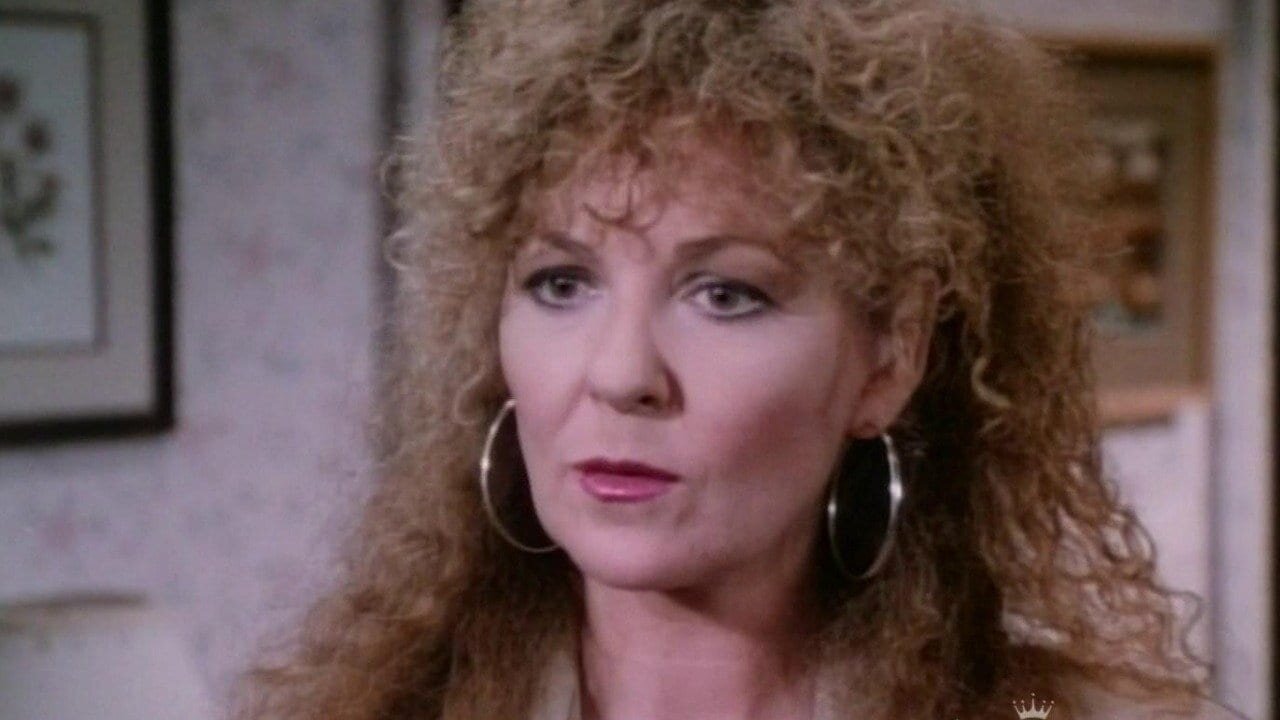
Jessica Fletcher has a way of making high-stakes murder feel like a cozy Sunday afternoon. It's the hair. The typewriter. The sheer audacity of a mystery novelist being present for more homicides than a metropolitan SWAT team. But if you're a fan of the show, you probably remember the two-part event Murder She Write Mirror Mirror on the Wall. It wasn't just another episode. It was a collision of egos, a clash of legendary actresses, and a rare moment where J.B. Fletcher actually met her match in the vanity department.
Jean Simmons. That’s the name that usually comes up when people talk about these episodes. She played Eudora McVeigh, a rival mystery writer who was essentially the anti-Jessica. While Jessica is all Maine pragmatism and bicycle rides, Eudora was all velvet robes, dramatic lighting, and a crumbling sense of self-worth.
It’s personal.
Most Murder, She Wrote episodes follow a formula. Jessica visits a friend. Someone dies. The local sheriff is a bumbling idiot. Jessica finds a loose thread on a carpet. Case closed. But "Mirror, Mirror on the Wall" (Season 5, Episodes 21 and 22) broke the mold by making the mystery about the nature of storytelling itself. It’s a meta-narrative before we really used terms like "meta."
The Setup: When Eudora McVeigh Came to Cabot Cove
Cabot Cove is usually Jessica’s turf. It’s her fortress of solitude, or at least her fortress of clam chowder. When Eudora McVeigh arrives, the atmosphere shifts instantly. Eudora isn’t there for a friendly visit. She’s there because her career is flagging, her husband is straying, and she’s desperate to reclaim the spotlight that Jessica currently occupies.
The tension is thick enough to cut with a letter opener.
Eudora’s entrance is classic 1980s melodrama. She’s theatrical. She’s fragile. She’s dangerous. The episode titles—Murder She Wrote Mirror Mirror on the Wall—obviously nod to Snow White, casting Eudora as the Evil Queen looking into her glass and seeing Jessica as the "fairest" (or perhaps most successful) writer in the land. It’s a brilliant bit of casting. Jean Simmons brought a genuine pathos to the role. You almost feel bad for her, even when she’s clearly up to no good.
Then the apples show up.
Yes, poisoned apples. If the title wasn't enough of a hint, the plot doubles down on the fairy tale imagery. Eudora brings Jessica a gift of apples, and soon enough, someone is keel-over dead. But it’s not Jessica. It’s never Jessica. The mystery isn't just "who did it," but rather "is Eudora actually crazy enough to do this?" Or is someone else using her legendary instability as a smokescreen?
Breaking Down the Plot of Murder She Wrote Mirror Mirror on the Wall
This was a two-parter for a reason. The narrative is dense. We have Eudora’s long-suffering husband, Hank, played by Ken Howard. We have the internal politics of the publishing world. And we have Seth Hazlitt, who—bless his heart—gets caught in the crossfire because he’s always just there when things go wrong in Cabot Cove.
Actually, Seth’s involvement is what raises the stakes. When Jessica’s friends are in danger, she doesn't just solve the crime; she goes on a warpath.
The first half of the story builds the psychological profile of a woman on the edge. Eudora is obsessed with Jessica’s success. She steals Jessica’s notes. She tries to emulate her style. It’s Single White Female but with more tweed and better manners. By the time the first hour wraps up, the audience is led to believe Eudora is the culprit. It’s too easy. It’s too obvious.
That’s the genius of the writing in this era.
The second half flips the script. We move away from the "crazy rival" trope and into a much darker exploration of betrayal. The actual murder involves a complex switcheroo. It turns out the poisoned apple was meant for someone else, or perhaps it wasn't. The investigation leads Jessica to realize that Eudora is being framed—or at least manipulated—by those closest to her.
Why This Episode Is an Essential Piece of TV History
If you look at the ratings from 1989, Murder, She Wrote was a juggernaut. It wasn't just a "grandma show." It was a masterclass in guest-star management. "Mirror, Mirror on the Wall" featured not just Jean Simmons and Ken Howard, but also Shelley Fabares and David Hedison.
The production value was peaked here.
The direction by Walter Grauman is particularly moody. He uses shadows and reflections—literally playing into the "mirror" theme—to show Eudora’s fractured psyche. There’s a specific shot of Eudora looking into a vanity mirror that is haunting. It’s not the typical bright, flat lighting of a standard procedural. It feels like a film noir condensed into a television format.
Angela Lansbury, as always, is the anchor. In Murder She Wrote Mirror Mirror on the Wall, she plays Jessica with a mix of pity and professional sternness. She doesn't dislike Eudora; she's fascinated by her. There’s a mutual respect between the characters that makes the eventual reveal even more tragic. Jessica doesn't want Eudora to be the killer. She wants her to be better than that.
Misconceptions About the Ending
People often misremember the ending of this two-parter. Some think Eudora actually dies. She doesn't. Others think it was all a dream or a story Jessica was writing. Nope. It was a cold, hard Cabot Cove reality.
The real killer was [Spoiler Alert for a 35-year-old show] Victor Leyland.
The motive? Pure, unadulterated greed and a desire to silence Eudora. It’s a classic "follow the money" situation that Jessica sniffs out by paying attention to the small stuff—like who knew about the apples and when. The complexity of the frame-up is what makes this a top-tier episode. It required Jessica to look past the obvious "crazy woman" narrative that everyone else was buying into.
How to Watch and Analyze It Today
If you're going back to watch Murder She Wrote Mirror Mirror on the Wall, pay attention to the pacing. Modern television is fast. It cuts every three seconds. This episode breathes. It allows Jean Simmons to chew the scenery. It allows the silence in the Maine woods to feel oppressive.
Honestly, it’s a lesson in how to build a mystery without relying on forensic science or high-tech gadgets. Jessica wins because she understands human nature. She understands that a woman like Eudora, as flawed as she is, wouldn't be that sloppy with a poisoned apple. It’s about character consistency.
You can find it on various streaming platforms like Peacock or Freevee. It’s Season 5, Episodes 21 and 22. Watch them back-to-back. Don't split them up. The momentum is lost if you wait a day between chapters.
Actionable Insights for Mystery Fans
If you’re a writer or just a hardcore fan of the genre, "Mirror, Mirror on the Wall" offers a few "Jessica-approved" lessons:
- Look for the 'In-Character' Flaw: A suspect is often framed by their most obvious personality trait. In this case, Eudora's known instability made her the perfect fall guy.
- The Power of the Two-Parter: Not every story can be told in 42 minutes. Some mysteries need the extra room to establish a psychological atmosphere.
- Check the Motive Twice: The person who benefits the most isn't always the person with the clearest motive. Sometimes the motive is a cover for a different benefit entirely.
- The Setting Matters: Cabot Cove isn't just a place; it's a character. Using the familiar backdrop of Jessica’s home made Eudora’s intrusion feel more violating and the mystery more personal.
The legacy of Murder She Wrote Mirror Mirror on the Wall remains strong because it challenged Jessica Fletcher. It gave her a mirror image of what her life could have been if she had let fame and bitterness take hold. It’s the closest Jessica ever came to facing her own dark side, even if it was through the eyes of a rival.
To fully appreciate the nuance, re-watch the final confrontation between Jessica and the killer. Notice how she doesn't use a gun or a badge. She uses the truth, delivered with that polite but devastating Maine "I'm disappointed in you" tone. That's the real magic of the show.
Check your local listings or streaming service to revisit this Season 5 classic. Focus on the interplay between Lansbury and Simmons; it’s a rare pairing of two Hollywood legends at the top of their game. Pay close attention to the props—the apples and the manuscripts—as they hold the keys to the entire puzzle. If you're analyzing the script, look for how the writers planted the seeds of the killer's identity as early as the first fifteen minutes of Part 1.