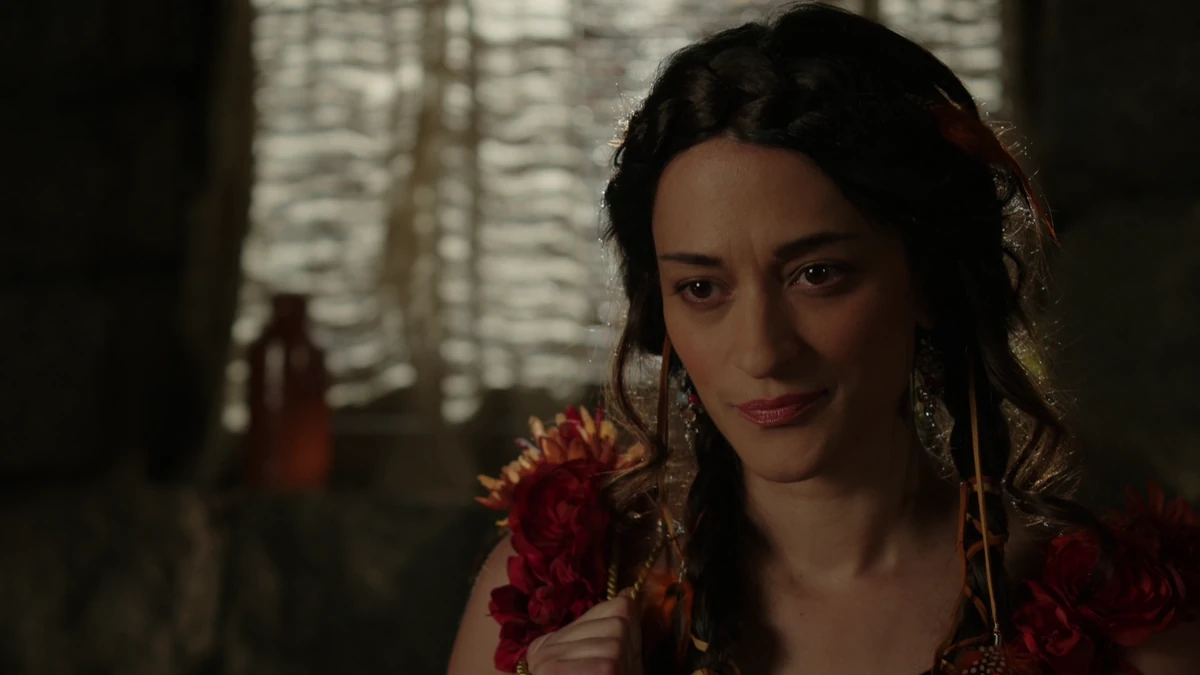
Honestly, if you blinked during the later seasons of ABC's Once Upon a Time, you might have missed one of the most interesting lore pivots in the entire series. We're talking about the Once Upon a Time Tiger Lily arc. Most people remember Tiger Lily from the original J.M. Barrie play or the 1953 Disney film as the stoic princess of the "Pickaninnies" tribe. But in the hands of showrunners Edward Kitsis and Adam Horowitz, she became something entirely different. She wasn't just a Princess in Neverland; she was a fallen Fairy.
That’s a massive shift.
It changed the stakes for everyone. Suddenly, the history of the Black Fairy and the origins of Rumplestiltskin’s trauma weren't just about his immediate family. They were tied to this warrior who used to wear wings.
The Version of Tiger Lily Nobody Saw Coming
When we first meet the Once Upon a Time Tiger Lily in Season 6, she isn't dancing around a campfire. She’s dragging a semi-conscious Hook through the brush of Neverland. Sara Tomko brought a grounded, almost weary grit to the role that felt worlds away from the stylized, often problematic depictions of the character we’ve seen in the past.
She was a Fairy. Let that sink in.
In the Once universe, Fairies are the ultimate moral compasses, yet Tiger Lily chose to give up her wings. Why? Because of Fiona—the Black Fairy. The show reveals that Tiger Lily was actually the one who helped Fiona discover her destiny, a mistake that eventually led to Fiona’s transformation into a villain. Tiger Lily didn't just lose a friend; she felt responsible for creating the greatest evil the realms had ever known. That kind of guilt does a number on a person.
It makes her more than a plot device. It makes her a tragic figure.
Breaking Down the Neverland Connection
You’ve got to remember that Neverland in Once Upon a Time is a nightmare. It’s not the whimsical playground of the books. It’s a psychological prison ruled by a sociopathic Peter Pan (who, in a wild twist, is actually Rumplestiltskin’s father).
Tiger Lily was the resistance.
While the Darlings were being tormented and the Lost Boys were falling in line, she stayed in the shadows. Her interaction with Captain Hook is where we see her real personality shine. She doesn't trust him. Why would she? He’s a pirate who spent centuries serving his own interests. Yet, she gives him the dreamshade-tipped arrow because she knows that the battle against the Black Fairy is bigger than their petty grievances.
What the show got right about her history
- The Casting: Sara Tomko, who is of Native American (Polish and Native American/Mvskoke) descent, provided a level of authenticity that the show desperately needed. It moved the character away from the "damsel" trope.
- The Backstory: Linking her to the Blue Fairy and the Sacred Grove gave her a seat at the table of the show’s high mythology.
- The Motivation: She wasn't motivated by a crush on Peter Pan or Hook. She was motivated by atonement.
Why Fans Still Argue About Her Screen Time
The problem? She just wasn't there enough.
By the time Once Upon a Time Tiger Lily showed up in Season 6, the series was already juggling about twenty different main characters. We had the Savior’s internal crisis, the Evil Queen’s redemption/split personality, and the looming Final Battle. Tiger Lily felt like a character who could have carried an entire season's worth of B-plots, but she was relegated to a few key episodes like "Never-Believer" and "The Final Battle."
It felt rushed.
We see her in the past, failing to stop Fiona from shearing her own shadow. Then we see her in the present, handing off a magical MacGuffin. We wanted more of the transition. How does a Fairy decide to live as a mortal among the tribes of Neverland? What did she do during the years when Pan was at his most powerful? These are the gaps that fanfiction usually fills because the writers simply ran out of time.
The Black Fairy and the Wand of Destiny
The core of Tiger Lily’s relevance is the "Wand of the Black Fairy."
Tiger Lily is the one who reveals the truth about Rumple’s mother. This is the "Aha!" moment of the season. Without her, the heroes are just swinging in the dark. She provides the context that Fiona wasn't born evil; she was a protective mother who went off the rails. Tiger Lily’s attempt to use the shears of destiny to cut Fiona’s power is one of the most tense scenes in the later seasons.
She fails. But her failure is human.
Later, in the series finale "Leaving Storybrooke," we see a glimpse of her again. She’s present for the coronation of Regina as the Good Queen. It’s a small, silent moment, but it signifies that she finally found peace. The war she started—by accidentally enabling the Black Fairy—was finally over.
How Tiger Lily Changed the "Once" Formula
Most characters in Once Upon a Time are defined by their "Cursed" versions in Storybrooke. We know Mary Margaret is Snow White. We know David is Prince Charming.
Tiger Lily is different.
She never had a Storybrooke alter-ego. She existed entirely outside the Curse's original reach, surviving in Neverland while time stood still. This gave her a "Legend" status among the fans. She was a survivor of the old world who didn't need a modern-day apartment or a job at the diner to be relatable.
A quick look at her powers and tools
She didn't use a wand like the Blue Fairy. She used her environment. She used a dagger. She used stealth. When she did use magic, it was desperate and costly. This made her feel "real" in a show that often relied on flashy CGI fireballs.
The Legacy of the Character
If you're looking for the Once Upon a Time Tiger Lily because you're doing a rewatch, pay attention to the way she looks at the other Fairies. There is a mixture of longing and resentment there. She represents the path not taken—the Fairy who chose to stay in the dirt and fight rather than watch from the clouds.
She also represents a shift in how the show handled indigenous representation. While earlier seasons were criticized for their handling of diverse cultures, Tiger Lily felt like a step toward a more nuanced, respectful approach, even if her screen time was limited.
What you can do to explore this more
- Watch Season 6, Episode 17 ("Awake") and Episode 19 ("The Black Fairy"): These are the essential Tiger Lily episodes where her backstory with Fiona is fully explored.
- Compare the source material: Read the original Peter and Wendy by J.M. Barrie. You’ll see just how much the TV show departed from the "Great Big Little Panther" imagery to create something new.
- Look into Sara Tomko’s other work: Her performance in Resident Alien is fantastic and shows off the same grounded intensity she brought to Neverland.
The character of Tiger Lily in Once Upon a Time serves as a reminder that even in a world of "True Love's Kiss" and "The Savior," the most compelling stories are often the ones about the people who made mistakes, lost their way, and spent the rest of their lives trying to make it right. She wasn't just a princess. She was a witness to the birth of a monster, and she never stopped fighting to fix it. That's a lot more interesting than a fairy tale ending.
If you are diving back into the series, look for the subtle ways she influences Hook's growth. She reminds him of who he was before Emma—and who he could be if he actually stepped up. She’s the conscience of Neverland, even without her wings.
Actionable Insights for Fans
To truly appreciate the depth of the Tiger Lily arc, focus on the theme of "Choice vs. Destiny." Unlike Emma Swan, who was told she was the Savior, Tiger Lily chose to intervene in the Black Fairy’s life, and she chose to stay in Neverland.
- Analyze the Shears of Destiny: Understand that this magical item, introduced via Tiger Lily, is the show’s way of discussing free will. It is the most important philosophical tool in the final seasons.
- Track the Fairy Lore: If you're a lore nerd, map out the hierarchy of Fairies. You'll notice Tiger Lily occupies a unique space as a "Fallen Fairy" who isn't actually "Evil," a rarity in the series.
- Revisit the Series Finale: Notice her placement in the final scenes. It’s a deliberate choice by the directors to show that the "Native" elements of the magical realms have been integrated into the new, unified Storybrooke.