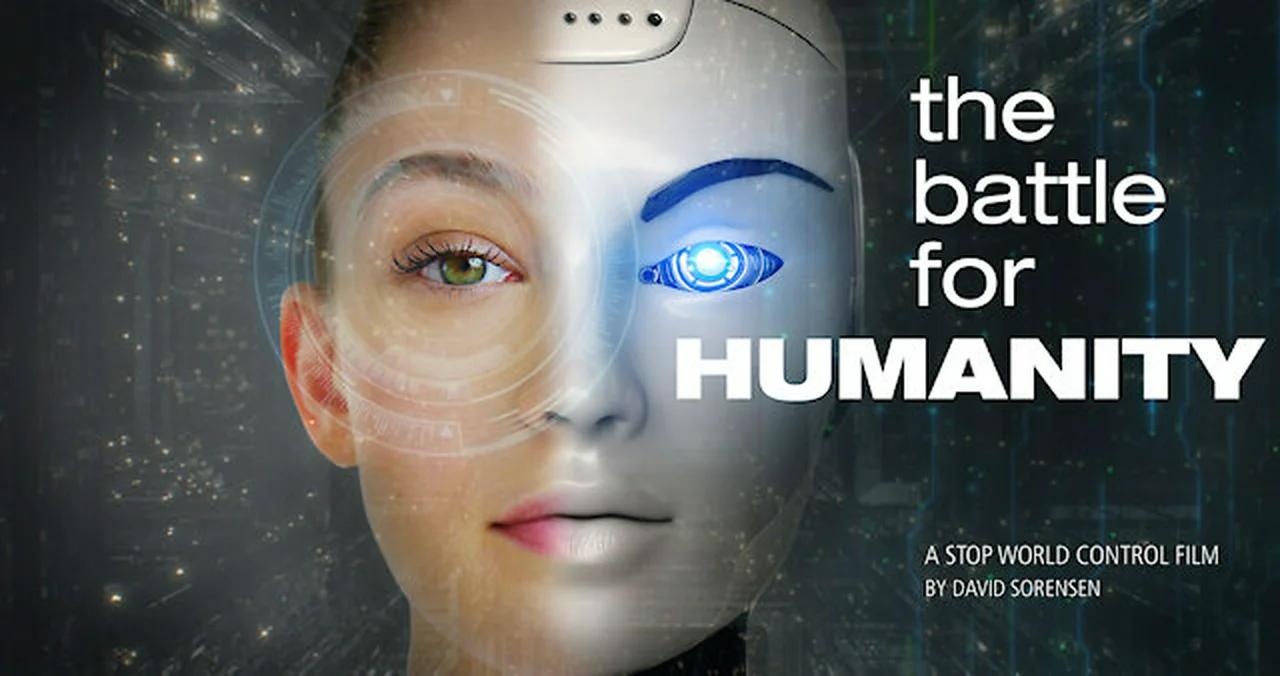
Storytelling is getting weird. You’ve probably noticed that the old tropes—the lone hero with a laser gun, the evil empire that just wants to blow up planets for no reason—are feeling a bit stale lately. People want more. They want philosophical weight. That's exactly where the narrative arc of Seres Resolve the Battle for Humanity comes into play, and honestly, it’s one of the more misunderstood pieces of modern science fiction lore. It isn't just about explosions or high-stakes dogfights in the vacuum of space. It’s deeper. It focuses on the "Seres," a concept or entity (depending on which specific iteration of the lore you're diving into) that steps in when the species is at its absolute breaking point.
Humans are messy. We fight, we break things, and we repeat our mistakes. In the context of this specific saga, the battle for humanity isn't just an external conflict against an alien threat; it's a trial.
The Core Philosophy: What Most People Get Wrong
Most fans initially think the Seres are just another "Deus Ex Machina." You know the type—the powerful force that shows up at the last second to save the day because the writers painted themselves into a corner. But that’s a shallow take. If you look at the subtext, the resolution isn't about salvation. It's about mediation. The Seres don't just "win" the war for us. They force a mirror up to the species.
Think about the way Arthur C. Clarke handled the Overlords in Childhood's End. There’s a similar vibe here. The "battle" being resolved isn't just the one with lasers; it's the internal friction of a civilization that hasn't yet earned its place among the stars. The Seres represent a cosmic audit.
Why does this matter now? Because we’re living in an era where we feel like we’re constantly on the brink of some kind of "end of the world" scenario, whether it’s climate, AI, or geopolitical tension. Seeing a narrative where a higher intelligence or a specific technological breakthrough—the Seres—actually resolves the battle for humanity provides a weirdly comforting, if slightly chilling, perspective on our own lack of agency.
How the Narrative Tension Build-Up Works
The stakes have to be high. If they aren't, the resolution feels cheap. In the timeline leading up to the climax, humanity is usually depicted as fractured. We see different factions—traditionalists who want to fight to the death, and pragmatists who want to surrender.
Then you have the Seres.
They don't speak in riddles, usually. They act with a terrifying kind of efficiency. One of the most striking things about how Seres Resolve the Battle for Humanity is portrayed is the lack of "glory." There are no medals at the end. There’s just the quiet realization that the old way of living—the constant conflict—is over because it’s been rendered obsolete by a superior logic.
A Shift in Power Dynamics
Instead of the typical "we beat the bad guys" ending, we get something more nuanced.
- The Seres introduce a neutral third party that neither side can defeat.
- Humanity is forced to redirect its energy from combat to adaptation.
- The "victory" is actually a transformation of what it means to be human.
It’s kinda like when two kids are fighting over a toy and a parent doesn't just give the toy to one of them, but takes it away and explains why they both failed the "sharing" test. It's humbling. It’s also why some readers find it frustrating. We want the hero’s journey. We want the protagonist to strike the final blow. But in this story, the final blow is struck by a force we barely understand, and we have to live with the consequences of being saved by someone else.
The Role of Advanced Technology or Higher Evolution?
There is a huge debate in the community about whether the Seres are biological, digital, or something completely beyond that. Some theorists argue they represent the pinnacle of post-humanism. Basically, they are what we could become if we stop trying to kill each other for five minutes.
If you look at the work of experts like Nick Bostrom or even the speculative fiction of Isaac Asimov, the idea of a "Protector" or a "Resolver" is a recurring theme. The Seres fit right into that niche. They aren't just characters; they are a solution to the Fermi Paradox. Maybe we haven't met other aliens because the Seres (or things like them) keep the peace by stepping in before civilizations reach a "Great Filter" event.
Why We Keep Returning to This Story
Let’s be real. The world feels chaotic. Watching or reading about a scenario where the Seres Resolve the Battle for Humanity offers a sense of "ordered" resolution that we don't get in real life. In the real world, conflicts drag on for decades. In the world of the Seres, there is a definitive end.
It’s also about the aesthetic. The way the resolution is visualized—often with massive, silent structures or subtle shifts in reality—contrasts sharply with the loud, dirty reality of human warfare. It's clean. It's clinical. It's a bit scary.
Honestly, the most interesting part isn't the battle itself. It's the "Day After." What does a soldier do when the war is over not because of a treaty, but because a higher power simply decided the war was finished? That’s where the real drama lives. The identity crisis of a warrior race that no longer has anything to fight is a goldmine for psychological storytelling.
Critical Perspectives
Of course, not everyone loves this. Critics often point out that having an external force resolve the "battle for humanity" robs the human characters of their "arc." If we don't save ourselves, did we really learn anything?
It’s a valid point.
But maybe that’s the point of the Seres. Maybe the lesson is that we can't save ourselves. It’s a cynical view, sure, but it’s one that resonates with a lot of people who look at the news and feel a sense of hopelessness. The Seres are the "hope" for people who have given up on people.
Key Takeaways and What to Look For Next
If you’re diving into this lore for the first time, don't look for the "big hero." Look for the shifts in the background. Look at how the Seres interact with the environment.
- Pay attention to the silence. Most resolutions in this series happen without a single word being exchanged.
- Watch the technology. The way the Seres manipulate matter or time is usually the key to how they end the conflict.
- Observe the human reaction. The fear, the relief, and the eventual resentment are what make the story feel "human" despite the sci-fi trappings.
Moving Forward with the Lore
To truly understand how the Seres Resolve the Battle for Humanity, you need to step away from the idea of "winning." Start looking at the story as a transition. We aren't moving toward a victory; we are moving toward a new state of being.
If you want to explore this further, start by re-reading the middle chapters where the first "signs" of the Seres appear. They are usually hidden in plain sight. Then, look at the "Post-Resolution" texts. They deal with the fallout of peace—which, as it turns out, is a lot more complicated than war.
Check out the community forums or dedicated wikis that track the different "Intervention Events." These are the specific moments where the Seres' influence is most visible. You'll find that the "battle" was actually won long before the final page; the humans just took a long time to realize it.
The next step is to apply this lens to other sci-fi you consume. Is the resolution internal or external? Once you see the pattern of the Seres, you'll start seeing it everywhere. It’s a fundamental shift in how we imagine the future of our species. We aren't just looking for a way to win; we're looking for a way to be finished with the fight. That's the real legacy of the Seres.