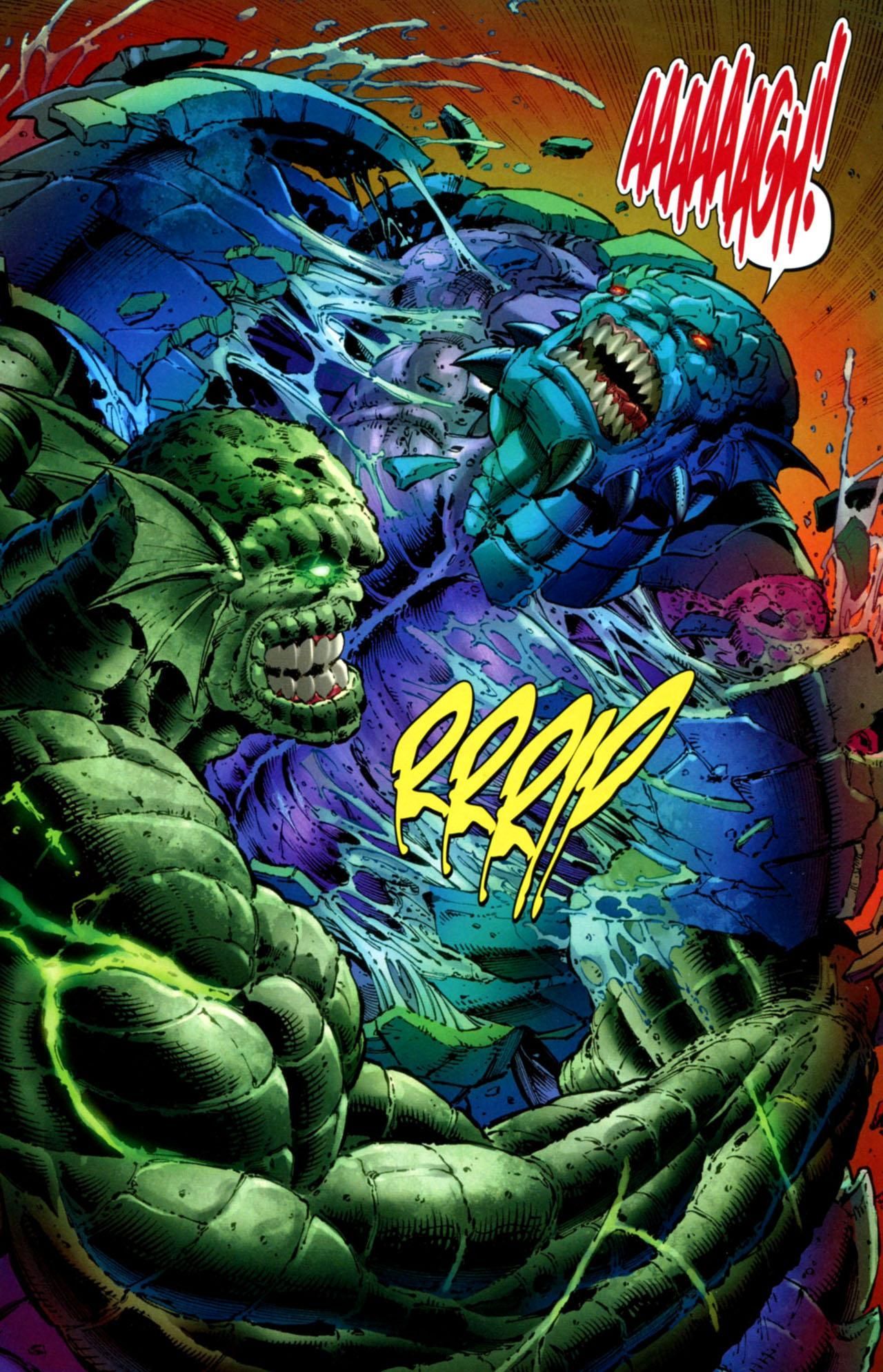
The year was 2008. Marvel Studios was a massive gamble. Before the billion-dollar franchises and the multiversal chaos, we had a gritty, sweat-soaked showdown in Harlem. We had the Abomination Hulk 2008 clash. Most people remember Iron Man as the spark that lit the fuse, but Louis Leterrier’s The Incredible Hulk gave the MCU its first taste of genuine, monstrous stakes. It wasn't clean. It wasn't polished. It was ugly.
If you go back and watch that final sequence, it feels different from the CGI-heavy brawls of the current era. There’s a weight to it. Tim Roth’s Emil Blonsky wasn't just another villain of the week; he was a man addicted to the rush of power. When he finally transforms into the Abomination, he becomes a distorted mirror of Bruce Banner’s curse.
Honestly, the Abomination from 2008 is still the most terrifying version of a Hulk-level threat we’ve seen. He has those protruding spinal spikes. His ears are weirdly recessed. He looks like a biological mistake.
The Transformation of Emil Blonsky
Let’s talk about Emil Blonsky. He wasn't a scientist. He was a soldier, a "Super Soldier" wannabe. That’s the crucial bridge to the rest of the Marvel Universe. General Thaddeus "Thunderbolt" Ross was trying to recreate the Captain America serum, and Blonsky was the willing guinea pig.
The Abomination Hulk 2008 dynamic is rooted in envy. Blonsky sees the Hulk not as a monster to be feared, but as a pinnacle of achievement. He wants that strength. He demands it. After receiving a low-dose injection of the experimental serum, his reflexes become superhuman, but his mind starts to fray. He kicks the Hulk in the face at Culver University. Think about that. A human man literally tries to martial-arts-kick a gamma giant. It goes about as well as you’d expect—every bone in his body is pulverized—but his recovery is what sets the stage for the horror to come.
The real tragedy of the 2008 film is that Blonsky didn't just want to be strong; he wanted to be the strongest. By the time he forces Samuel Sterns to inject him with Banner’s synthesized blood, he’s already a shell of a man. The resulting mutation into the Abomination is a permanent, agonizing physical manifestation of his internal greed. Unlike Banner, he can't turn it off. He’s stuck in that skin.
Why the Harlem Fight Hits Different
The battle in Harlem is peak 2000s action cinema. It’s loud. It’s destructive. It uses the environment in ways that feel visceral. When the Hulk tears a police car in half to use as boxing gloves, it isn't just a cool visual. It’s a tactical adaptation. He’s outmatched.
The Abomination is actually stronger than the Hulk at the start of their fight. That’s a detail people often forget. In the comics and the 2008 film, the Abomination retains his human intelligence and starts with a higher base strength level. The only reason Hulk wins is the classic "the madder Hulk gets, the stronger Hulk gets" mechanic.
Edward Norton’s Hulk was leaner and more vascular than the Mark Ruffalo version. He looked like an anatomy drawing come to life. When he faces off against the Abomination Hulk 2008 version, the contrast is stark. You have the "hero" who looks like a person pushed to the limit, versus a villain who looks like a carcass reanimated by gamma radiation. The choreography by Terry Notary—who actually performed the motion capture for both characters—is heavy. You feel the ground shake with every slam.
Visual Effects and the 2008 Aesthetic
Visual effects in 2008 were in a transition period. Rhythm & Hues, the studio behind the creatures, went for a textured, "wet" look. They wanted the skin to look real. They wanted the muscles to slide under the flesh.
- Skin Texture: They used subsurface scattering to make the light hit the skin and bounce back, giving it a fleshy, non-plastic look.
- Proportions: Abomination was intentionally oversized, standing at nearly 12 feet tall compared to Hulk’s 9 feet.
- Audio Design: The roar of the Abomination was a mix of lions, tigers, and a human scream pitched down to a subterranean level.
Some critics at the time complained it looked like "video game graphics," but looking back from 2026, there is a grit there that modern movies often lack. Modern MCU fights are often set in empty airports or digital voids. The Harlem fight happened in a crowded city. People were dying. Fires were burning. It felt like a disaster movie.
The Legacy of the Abomination
For a decade, it seemed like Marvel wanted to forget this movie existed. Mark Ruffalo replaced Norton. The tone shifted toward comedy. But then, Shang-Chi and the Legend of the Ten Rings happened. Suddenly, Tim Roth was back.
However, the Abomination we see in Shang-Chi and She-Hulk: Attorney at Law is different. He’s got the comic-accurate "ears" or fins now. He’s more colorful. He’s... nicer? It’s a jarring shift for fans of the Abomination Hulk 2008 era. In 2008, he was a murderer. In 2022, he was a self-help guru running a retreat for C-list villains.
This shift highlights the evolution of the MCU itself. We’ve moved from the "grounded" realism of the late 2000s into a more comic-book-y, lighthearted space. While the new Abomination is fun, he lacks the menace of the Harlem brawler. The 2008 version was a predator. He enjoyed the carnage. He was the first villain to truly make the audience feel like the hero might actually lose a physical fight.
Fact-Checking the Production
There are a lot of rumors about why this movie feels so different. The truth is, Edward Norton was heavily involved in the script. He wanted a three-hour epic that focused on the psychology of Banner. Marvel and Leterrier wanted a 110-minute action movie. The tension on set was legendary.
This friction is actually what makes the movie—and the Abomination—so interesting. It’s a movie caught between two worlds. It wants to be a serious drama, but it also has to be a summer blockbuster. Because of this, the Abomination Hulk 2008 scenes are incredibly intense. They aren't interrupted by quips or jokes. When the two monsters collide, the movie treats it with the gravity of a natural disaster.
Actionable Insights for Fans and Collectors
If you're looking to revisit this era or understand the impact of the Abomination, here’s how to dive deeper without wasting time on fluff.
Track Down the Incredible Hulk: The Official Movie Adaptation
The comic adaptation actually includes scenes that were cut from the final film, offering more context on Blonsky’s mental state during his transformation. It’s a cheap find on the secondary market and clarifies a lot of the "why" behind his madness.
Compare the "Big Three" Hulk Fights
To truly appreciate the 2008 fight, watch it back-to-back with the Hulk vs. Hulkbuster fight in Age of Ultron and the Hulk vs. Thanos fight in Infinity War. You’ll notice that the 2008 fight is the only one where the Hulk uses the environment as a literal extension of his body. He isn't just punching; he’s improvising.
Watch the "The Consultant" One-Shot
This is a short film found on the Thor Blu-ray. It explains why Abomination wasn't in the Avengers. It turns out the World Security Council actually wanted Blonsky on the team because they viewed him as a war hero and Banner as the monster. Agent Coulson and Sitwell had to sabotage the meeting to ensure Blonsky stayed in his cage.
Study the Anatomy of the 2008 Model
For artists or character designers, the 2008 Abomination is a masterclass in "ugly-cool" design. Look at how the bones are protruding through the skin. It’s not just for aesthetics; it’s meant to look like his skeleton grew faster than his skin could stretch. It’s body horror disguised as a superhero movie.
The MCU has grown into something massive, but it’s worth remembering its roots. The Abomination Hulk 2008 fight wasn't just a spectacle; it was a proof of concept. It proved that you could have two CGI giants wailing on each other and still maintain a sense of tension, stakes, and genuine fear. It’s a darker chapter in the Marvel playbook, and frankly, we could use a little more of that grit today.
Instead of just waiting for the next crossover, go back and watch the Harlem sequence on a good screen with the sound turned up. Focus on the sound design—the way the metal groans and the concrete shatters. It’s a reminder that before they were icons, these characters were monsters. That’s a distinction that matters.
To get the most out of your rewatch, pay close attention to the eyes of the Abomination. Unlike the Hulk, whose eyes often reflect pain or confusion, the 2008 Abomination has a predatory stillness. He’s always looking for the next opening. That’s the difference between a man who is a monster and a man who chooses to be one.