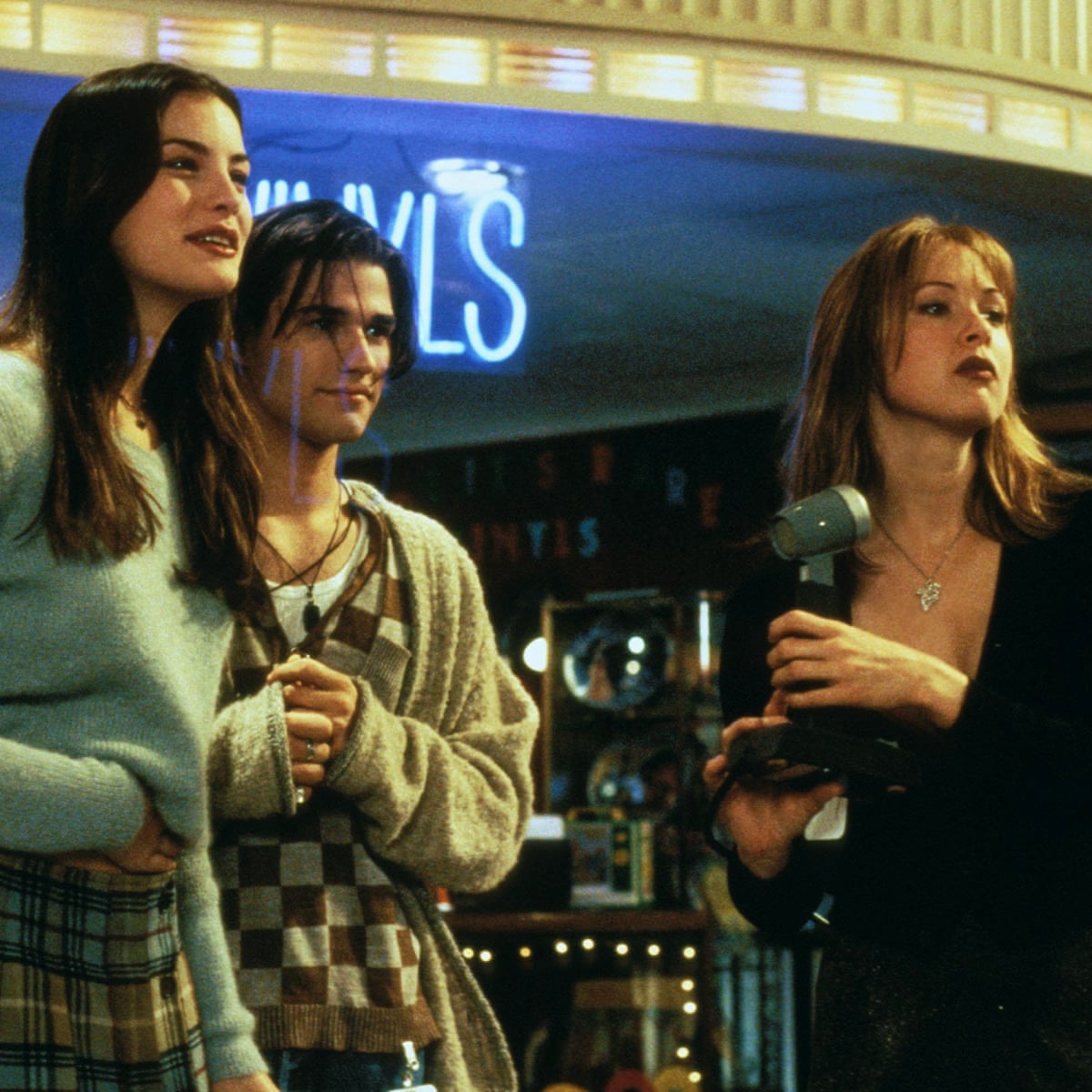
If you were alive in 1995, you probably remember the "Rex Manning Day" posters, the pleated plaid skirts, and that specific shade of blue on the CD spine of the soundtrack for Empire Records. It’s kind of a weird phenomenon. The movie itself? Honestly, it was a total flop at the box office. Critics absolutely shredded it. They called it a derivative mess that tried too hard to be The Breakfast Club for the grunge generation. But the music? That was a different story entirely. While the film was struggling to find an audience in theaters, the soundtrack was busy becoming the definitive sonic wallpaper for every suburban teenager who felt slightly misunderstood. It eventually went gold. It outlived the film’s initial reputation. It’s one of those rare cases where the collection of songs actually has more cultural "sticky factor" than the 90 minutes of film it was meant to support.
The Weird Logic of the 90s Soundtrack Boom
Back then, major labels treated soundtracks like curated mixtapes with massive budgets. A&M Records knew what they were doing. They didn't just throw together random hits; they built a vibe that felt like a localized radio station for a store that didn't actually exist. You've got Gin Blossoms. You've got The Cranberries. You've got Better Than Ezra. It was the height of "Alternative," back when that word actually meant something specific—usually jangling guitars and singers who sounded like they’d just woken up from a nap.
The soundtrack for Empire Records hit the sweet spot between mainstream accessibility and indie credibility. It’s a strange mix. You have the Gin Blossoms’ "Til I Hear It From You," which is basically a perfect pop-rock song, sitting alongside "Liar" by The Rollins Band. Henry Rollins screaming about betrayal feels out of place next to Toad the Wet Sprocket, yet on this disc, it somehow works. It captures that chaotic energy of being nineteen and not knowing if you want to dance or break something.
Most people don't realize how much the tracklist changed depending on where you bought it. If you were in the UK or Germany, you got different songs. The US version is the one everyone obsesses over, though. It’s the one that opens with Edwyn Collins’ "A Girl Like You." That distorted guitar riff and the 60s-soul-meets-90s-angst vocal set a mood that the movie often failed to match. The movie was bright and goofy; the soundtrack was cool and moody.
Why "Til I Hear It From You" Became an Anthem
If you want to understand the success of the soundtrack for Empire Records, you have to look at the Gin Blossoms. Jesse Valenzuela and Robin Wilson were the kings of the mid-90s radio landscape. They wrote "Til I Hear It From You" specifically for the film after seeing a rough cut. It’s a song about the anxiety of rumors and the desperation for a direct answer. It peaked at number 9 on the Billboard Hot 100 Airplay chart. It’s the anchor. Without that song, the album might have just been another forgotten compilation.
But it wasn't just them.
The Cranberries contributed "Liar," a track that wasn't on their massive albums like No Need to Argue. For fans, buying the soundtrack was the only way to get these "orphaned" songs. This was before Spotify. You couldn't just stream a B-side. You had to shell out $16.99 at a Tower Records or a Sam Goody. The scarcity of the tracks made the soundtrack for Empire Records a vital purchase for anyone trying to complete their collection of 90s royalty.
The Songs That Weren't Actually on the CD
This is the part that always trips people up. If you watch the movie, you hear "Sugar High." You see Renée Zellweger on the roof, belting it out. It’s the emotional climax of the whole "Save the Shop" narrative. But if you bought the CD back in '95? It wasn't there. Well, the Coyote Shivers version wasn't. The album featured a version by The Meices. It was a crushing disappointment for kids who wanted the movie version.
There’s also the whole "Rex Manning" thing. "Say No More, Mon Amour" is a parody of 80s washed-up pop stars, and it is intentionally terrible. It’s brilliant satire, but it didn't make the cut for the official soundtrack release because, well, it was a joke. Fans eventually tracked it down on promotional vinyl and later, the internet, but for a decade, that song was like a fever dream people only remembered from the VHS tape.
- Better Than Ezra: "Circle of Friends"
- The Martinis: "Free" (featuring Joey Santiago from the Pixies)
- Evan Dando: "A Hard Least"
- Juliana Hatfield: "Spin the Bottle"
These tracks weren't just filler. Juliana Hatfield was the "it girl" of the indie scene. Having her on the record gave it a stamp of approval that the critics couldn't ignore. "Spin the Bottle" is a quirky, syncopated track that feels like the 90s personified. It’s awkward. It’s catchy. It’s a little bit loud.
The Cult of "Damn the Man, Save the Empire"
The soundtrack for Empire Records survived because it represented an era of music retail that was dying even as the movie was being filmed. The irony is thick. A movie about an independent record store fighting off a corporate takeover was funded and distributed by a massive corporate entity, featuring music from a major label.
But for the listeners, that didn't matter.
The music felt authentic. When you listen to "Ready, Steady, Go" by The Meices or "I Don't Want to Live Today" by Ape Hangers, you’re hearing the sound of a very specific moment in time. This was the "Post-Grunge" era. The heavy, dark distortion of Nirvana had started to meld with power-pop melodies. It was less about heroin and more about high school heartbreaks and working a dead-end job.
Honestly, the soundtrack works because it’s a time capsule.
If you put it on today, you can practically smell the incense and the stale coffee of a 1990s record shop. It’s nostalgic, sure. But the songwriting is genuinely solid. Most "scene" soundtracks from that era haven't aged well. Go back and listen to some of the others—they’re full of cringe-worthy rap-rock transitions. The soundtrack for Empire Records avoided that by leaning into the jangle-pop and alternative rock that had actual staying power.
Does it hold up in 2026?
Surprisingly, yes. In an age of algorithmic playlists, there’s something refreshing about the deliberate flow of this album. It moves from the suave cool of Edwyn Collins into the frantic energy of The Meices. It slows down for The Innocence Mission’s "Bright as Yellow." That song is a hidden gem. Karen Peris has a voice that sounds like a flickering candle. It’s delicate, haunting, and completely different from everything else on the disc. It gives the album soul.
The soundtrack for Empire Records isn't just a list of songs. It’s a narrative. It tells the story of a day in the life of a group of outsiders better than the script actually did. You don't need the visuals of Liv Tyler or Ethan Embry to feel the "teen angst" energy. The music does the heavy lifting.
What Most People Get Wrong About the Credits
There’s a common misconception that the music was just a bunch of leftovers. In reality, the music supervision was handled by Mitchell Leib, who worked on huge projects like Pulp Fiction. He knew how to pick songs that defined a character.
For instance, the use of "Romeo and Juliet" by Dire Straits (the live version) in the film isn't on the soundtrack, but it’s one of the most searched-for things related to the movie. People are constantly looking for the "Empire Records version" of songs. This disconnect between the movie’s score and the commercial soundtrack is why there are so many "Complete Edition" playlists on Spotify today. The original 16-track CD was just the tip of the iceberg.
If you’re looking to dive back into this world, don't just stop at the official release. You have to hunt down the stuff that was left on the cutting room floor.
- Find the "Muzak" parodies: The background music playing in the store during the "Music Town" corporate takeover scenes is actually hilarious if you listen closely.
- Check out the solo work: Most of the bands on the soundtrack for Empire Records went on to release incredible full-length albums that never got the same attention. The Martinis, for example, are a 90s power-pop dream.
- Watch the "Rex Manning Day" fan videos: Every April 8th, the internet explodes with tributes. It’s become a legitimate holiday for vinyl collectors.
Real World Insights for Collectors
If you're looking for a physical copy, the vinyl is the way to go. For years, this soundtrack was only available on CD and cassette. When they finally did a Record Store Day vinyl release a few years back, it sold out instantly. It was a "yellow" pressing—a nod to the store's branding. It’s now a collector's item that fetches a decent price on Discogs.
The soundtrack for Empire Records is more than just a 90s relic. It’s a testament to the power of a well-curated vibe. Even if the movie felt like a caricature of teen life, the music felt like the real thing. It was messy, loud, and occasionally very sweet.
To get the most out of this soundtrack today, skip the shuffle button. Listen to it from start to finish. Let the transition from "A Girl Like You" into "Til I Hear It From You" play out the way the producers intended. It’s a masterclass in 90s sequencing. Then, go find the "Special Edition" or fan-made "Complete" playlists to hear the tracks like "Sugar High" and "Money (That's What I Want)" that actually appeared in the film's scenes.
The next time you’re feeling nostalgic for a time when "saving the shop" was the most important thing in the world, put this on. It doesn't just hold up; it explains exactly why that era felt so significant to the people who lived through it. Stop looking for the "perfect" 90s playlist—it was already made in 1995.