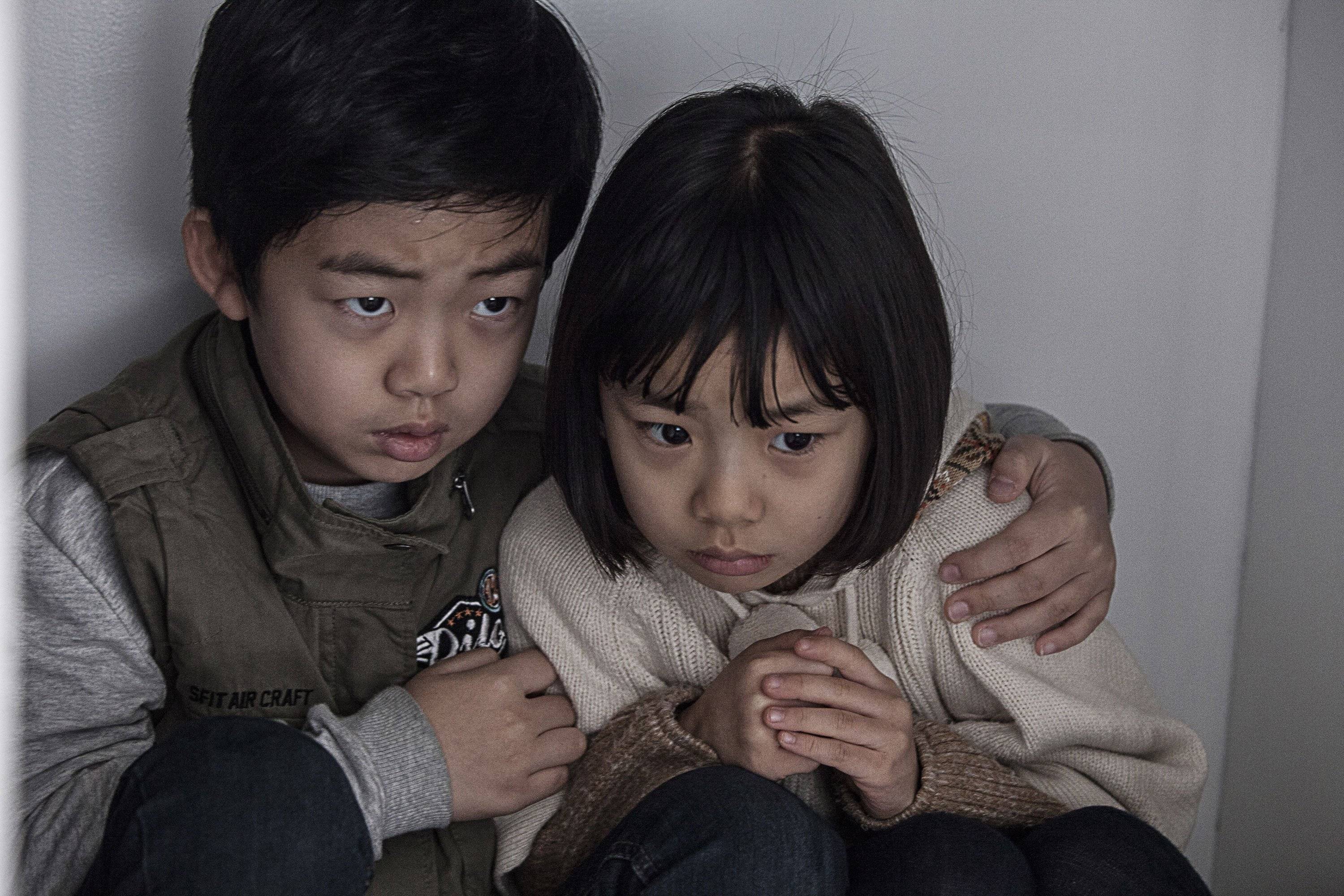
If you’ve ever walked into your apartment and felt like the furniture was shifted just an inch to the left, you’ve already tapped into the primal fear that fuels the hide and seek movie korean masterpiece. I’m talking about the 2013 sleeper hit Sumbakkokjil, directed by Huh Jung. It isn't just a movie. Honestly, it’s a localized phobia. While Hollywood was busy with jump-scares and CGI demons, South Korean cinema decided to look under your bed. Or, more accurately, inside your closet.
The plot follows Seong-soo, a successful businessman with a severe case of germaphobia and a shiny, high-end apartment. His life is perfect until he gets a call about his estranged brother’s disappearance. When he visits his brother’s grimy, decaying apartment complex, he notices weird symbols carved next to the doorbells. Circles. Squares. Triangles. These aren't just graffiti; they are a tally of who lives inside. One male. Two females. One child. It’s a chillingly efficient census for someone planning a home invasion.
The Terrifying Reality of Home Displacement
What makes the hide and seek movie korean version so much more effective than its American remake (or other similarly titled films) is the social commentary. In Seoul, real estate is a battlefield. People literally kill for a zip code. The film taps into "K-Horror" tropes but strips away the ghosts. There are no long-haired girls crawling out of TVs here. Instead, there’s a person in a motorcycle helmet. That’s it. Just a person who wants your life—and your living room.
Think about the psychological toll of urban living. You live in a building with five hundred other people. You share an elevator with them. You hear their muffled arguments through the vents. But do you actually know them? Huh Jung plays with this anonymity beautifully. The "Hide and Seek" game isn't a playground activity; it’s a predatory strategy. The villain doesn't want to kill you necessarily; they want to replace you. They want your coffee machine. They want your view of the Han River.
Why the Symbols Matter
The "doorbell code" wasn't just a screenwriter's invention. It actually sparked a massive urban legend in South Korea around the time of the movie's release. People started checking their own doorframes for tiny marks. While the police largely dismissed these as markings from delivery drivers or utility workers, the fear was real. The movie weaponized that existing anxiety.
- Circle: Represents a female resident.
- Square: Represents a male resident.
- Triangle: Represents a child.
If you saw these on your door tomorrow, you’d change the locks. Seong-soo’s obsession with cleanliness is a metaphor for his desire to keep his "perfect" life untainted by the lower class or the "dirty" secrets of his past. The irony? No amount of bleach can scrub away someone hiding in the crawl space.
Comparing the 2013 Original to Global Iterations
Let's get one thing straight: the hide and seek movie korean original is the definitive version. There was a 2021 American remake starring Jonathan Rhys Meyers, but it lost the "soul" of the story. Why? Because American horror often focuses on the "who" and the "why." Korean thrillers are much more interested in the "how much does this hurt?"
The 2013 film relies on "Living Space Horror." It’s a subgenre that Korea excels at—think Parasite or Strangers from Hell. In the original Hide and Seek, the apartment building itself is a character. The hallways are narrow. The lighting is jaundiced. You can almost smell the damp concrete. In the remake, everything felt a bit too "produced."
Nuance is everything. In the original, the lead actor Son Hyun-joo delivers a performance that is frantic and twitchy. You can see his mental health unraveling. He isn't a hero. He’s a deeply flawed man who is terrified of his own shadow. That groundedness makes the eventual violence feel earned rather than gratuitous.
Technical Mastery: Sound and Silence
Most people watch horror movies with their hands over their eyes. With the hide and seek movie korean experience, you should probably cover your ears instead. The sound design is oppressive. It uses the "phantom sounds" of a house—the clicking of a lock, the hum of a refrigerator, the scratching inside a wall.
There is a specific scene where a character is hiding under a bed while the intruder slowly walks across the room. We don't see the intruder's face. We only see their heavy, muddy boots. The sound of the boots hitting the floorboards is mixed so loudly that it feels like they are stepping on your chest. It creates a claustrophobic atmosphere that few Western directors manage to replicate without relying on a loud orchestral swell.
The Ending That Split Audiences
Without spoiling the specific beat-by-beat, the ending of the 2013 film is bleak. It suggests that once the "game" starts, it never really ends. It challenges the idea of the "home" as a sanctuary. For Seong-soo, the home becomes a trap. This subversion of the American "safe at home" trope is a hallmark of the Golden Age of Korean Thrillers.
The Socio-Economic Subtext
You can't talk about this movie without talking about class. The contrast between Seong-soo’s luxury high-rise and his brother’s crumbling tenement is the entire point. The villain represents the "unseen" population. The people who are pushed out of sight by gentrification.
When the intruder enters the luxury apartment, they aren't just there to steal jewelry. They are there to reclaim space. This makes the hide and seek movie korean narrative a precursor to Parasite. It deals with the "smell" of poverty and the "visibility" of the poor. It asks a haunting question: How many people did you ignore on your way to your front door today?
Why You Should Watch It Tonight (If You Don't Mind Insomnia)
If you haven't seen it, the movie is a masterclass in pacing. It starts as a mystery, shifts into a psychological thriller, and ends as a full-blown slasher. It doesn't waste time. Every scene builds the pressure.
Basically, it's the perfect "gateway" movie for people who think they don't like foreign films. It’s visceral. It’s fast. It’s genuinely smart. You’ll find yourself double-checking your closet doors for weeks. Honestly, the scariest part isn't the guy in the helmet. It's the realization that your home is only as private as you think it is.
Quick Facts for Your Next Movie Night
- Director: Huh Jung (who also did The Mimic, another great folk-horror flick).
- Box Office: It was a massive hit, grossing over $35 million on a modest budget.
- Real-life Inspiration: Based on real-life stories of "strangers living in homes" reported in New York and Tokyo.
Actionable Steps for the Ultimate Viewing Experience
To truly appreciate the hide and seek movie korean atmosphere, you shouldn't just stream it on your phone while folding laundry. This film demands your full attention to catch the subtle visual cues.
- Watch the 2013 Original First: Avoid the remakes until you've seen the source material. The tension is built into the specific cultural context of Seoul’s housing crisis.
- Check the Subs, Not the Dubs: The vocal performances, especially Son Hyun-joo's breathing and stutters, are vital to the tension. Dubbing loses that "edge."
- Pay Attention to the Background: In many scenes, the "intruder" is actually visible in the far background or in the reflection of mirrors long before the characters notice them.
- Research "Goshichon" and Korean Housing: Understanding the cramped living conditions of Korea’s lower-income "study rooms" gives the movie’s obsession with space a lot more weight.
- Secure Your Home: Just for peace of mind, maybe check your own doorframe for any weird pencil marks or scratches after the credits roll. It’s probably nothing. Probably.
The legacy of the hide and seek movie korean thriller is its ability to turn the most mundane objects—a doorbell, a closet, a helmet—into symbols of terror. It remains a benchmark for the genre because it understands that true fear isn't about what's lurking in the woods. It's about who might be living in your spare bedroom right now without you knowing.
Go watch it. Just keep the lights on.