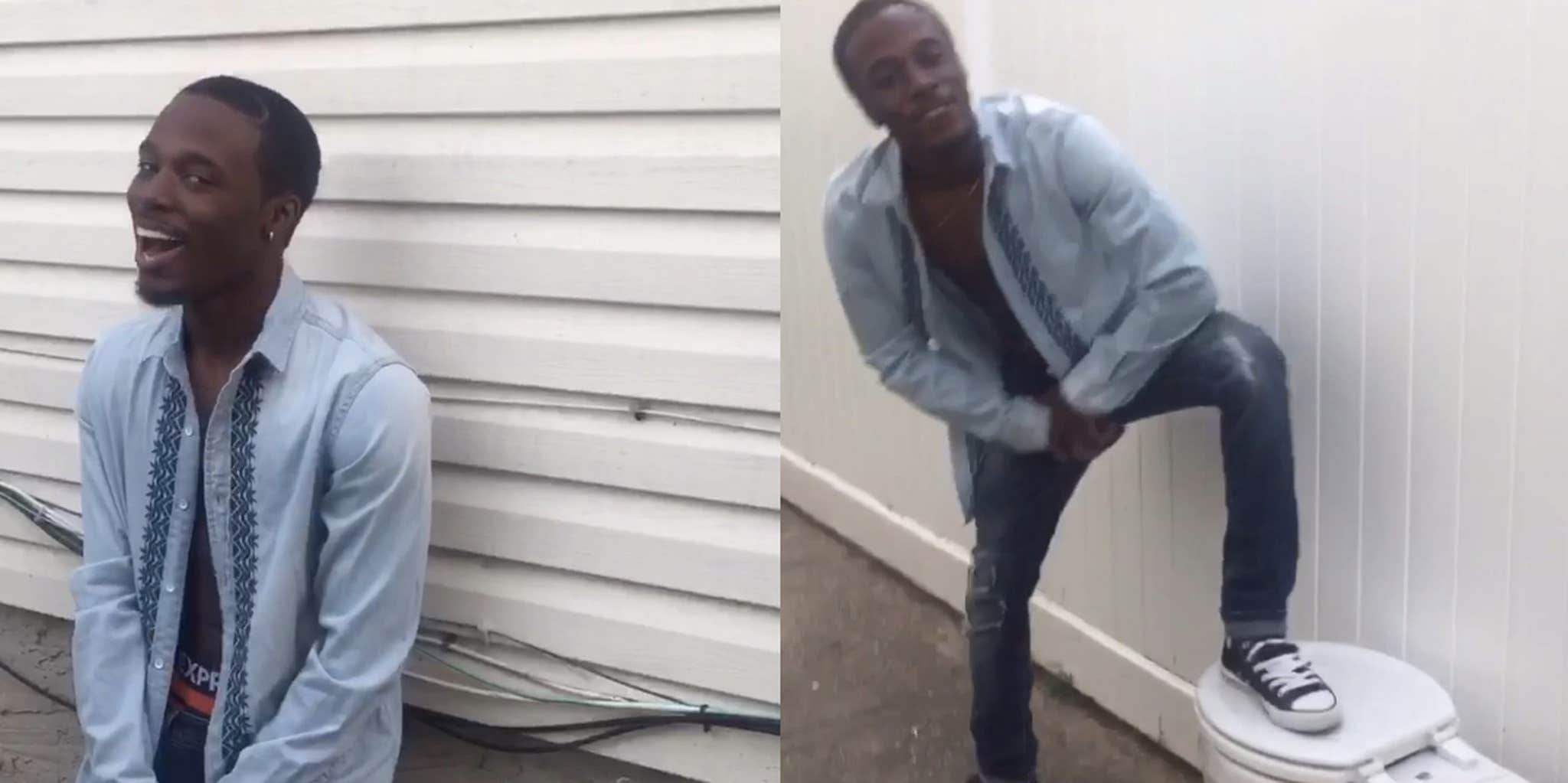
It started in a backyard. A simple, slightly out-of-focus video of a guy dancing near a toilet. You know the one. He’s wearing a blue shirt, the sun is hitting his face just right, and he’s singing a soulful, R&B-inflected version of a Next classic. But instead of the original lyrics, he’s asking a very specific, very accusatory question: Why u always lying? Nicholas Fraser probably didn’t wake up that morning in 2015 thinking he was about to change the vernacular of the internet forever. Memes usually die in a week. They’re like fruit flies. This one? It’s basically immortal. Even now, years after the Vine era collapsed into a heap of nostalgia, people still drop that line in group chats when someone claims they definitely, totally, 100% went to the gym at 5:00 AM.
The brilliance wasn’t just the song. It was the face. That grimace-smile-squint combo captured a universal human experience: knowing someone is full of it but being too entertained by the audacity of the lie to actually get mad.
The day a backyard Vine became a global anthem
Vine was a chaotic place. Six seconds isn't a long time, but for Nicholas Fraser, it was plenty. He took the 1997 hit "Too Close" by the R&B group Next—a song originally about, well, getting a little too excited on the dance floor—and flipped it into a confrontation about dishonesty.
The "Why U Always Lying" video worked because it was high-effort low-budget. He didn't just say the words. He performed them. He used a sink as a prop. He had back-up "dancers" who were mostly just standing there. It felt like something you and your friends would do on a boring Tuesday, which is exactly why it resonated.
When it hit, it didn't just trickle out. It exploded. Within days, celebrities were reposting it. Brands—always the last to the party—tried to use it to sell stuff. But the internet owned it. It became the de facto response to everything from fake news to that one friend who says they’re "five minutes away" when they haven't even put their shoes on yet.
The technical side of the viral loop
Why did this specific melody stick? Music theorists might point to the familiar pentatonic scale or the nostalgic 90s chord progression. Honestly, though? It’s just catchy. Fraser’s choice to use "Too Close" was a stroke of genius. Most people over the age of 20 already had that melody hard-wired into their brains. By layering a funny, relatable phrase over a pre-existing earworm, he created a double-layer of "stickiness."
It’s a psychological trick called "associative memory." You hear the beat, you expect the old lyrics, but you get the new ones instead. That subversion of expectation triggers a dopamine hit. We like being surprised, especially when the surprise is funny.
Why we still can't stop saying why u always lying
Social media has only gotten noisier since 2015. We live in an era of "clout chasing" and "main character syndrome." Everyone is constantly polishing their lives for the 'gram. In a world of filtered photos and curated captions, the Why u always lying meme serves as a necessary reality check. It’s the digital version of calling "BS."
Think about the context of modern lying. It's usually not malicious. It’s "performative."
- Someone posts a "no filter" selfie that clearly has three filters.
- A politician makes a promise they know they can't keep.
- A tech CEO claims a "revolutionary" new feature that is actually just a button that doesn't work.
In all these scenarios, Fraser’s face is the perfect rebuttal. It’s not an angry call-out. It’s a mocking one. It’s saying, "I see you, and you’re not fooling anyone."
The "Meme-to-Mainstream" Pipeline
Fraser didn't just disappear after the Vine loop stopped. He actually leaned into it. He released a full version of the song. He did interviews. He showed up in music videos. Most "meme stars" have a shelf life of about forty-eight hours before they become an answer to a trivia question. Fraser managed to stay relevant because he understood the joke. He wasn't the butt of it; he was the creator of it.
Compare this to other viral stars who try to fight their fame or get litigious about it. Fraser embraced the chaos. He recognized that "Why U Always Lying" was bigger than a six-second clip. It was a mood.
The cultural impact on AAVE and internet slang
We also have to talk about how the meme solidified certain phrasing in the mainstream. The use of "u" instead of "you" and the rhythmic delivery of the sentence is deeply rooted in African American Vernacular English (AAVE). Like many things on the internet, it was adopted by people who had no idea where it came from, but its origin is part of what gives it that specific, soulful "soul" that makes the parody work.
The meme crossed cultural lines because the feeling of being lied to is universal. Whether you're in Tokyo, London, or New York, everyone has that one cousin who claims they met Beyonce at a CVS.
The psychology of the "Liar's Smile"
There’s a reason Fraser’s expression in the video is so iconic. It mimics what psychologists call the "Duquesne smile," or more accurately, a subversion of it. He’s smiling, but his eyes are telling a different story. He’s looking at the liar with a mix of pity and amusement.
When we see someone lying, we often feel a sense of "second-hand embarrassment." We don't want to hurt their feelings, but we also can't let the lie stand. The meme allows us to bridge that gap. Sending the GIF is a way to say "I know you're lying" without starting a massive argument. It’s the "polite" way to be a hater.
How to use the meme in 2026 without being "cringe"
The internet moves fast. If you use a meme from 2015, you risk looking like a "digital boomer." But some things are classic. Like a good pair of Levi’s or a Beatles record, Why u always lying has entered the hall of fame.
To keep it fresh, you have to use it ironically or in very specific, high-stakes situations.
- The Over-the-Top Boast: When a friend claims they can bench press 400 pounds but struggles with a grocery bag.
- Corporate Gaslighting: When a company says "your call is important to us" while you've been on hold for forty-five minutes.
- Self-Deprecation: Use it on yourself. Post it when you tell yourself you’re only going to watch "one more episode" at midnight.
It’s all about the timing. If the lie is too serious, the meme feels trivial. If the lie is too small, the meme feels heavy-handed. You need that "Goldilocks zone" of dishonesty.
What Nicholas Fraser taught us about content
Beyond the laughs, there’s a lesson here for creators. You don't need a 4K camera. You don't need a lighting rig. You don't need a script approved by a marketing committee. You need a relatable truth and a bit of personality.
Fraser’s backyard was messy. The audio quality was "just okay." But the energy was 10/10. In an age where AI can generate perfect images and perfectly scripted videos, humans are craving something raw. We want to see a guy in his backyard singing about liars. We want the imperfections.
Actionable Takeaways for Navigating the "Lying" Internet
Dealing with the reality of "Why U Always Lying" in your daily life requires a bit of a strategy. Since we know the world is full of exaggeration, here is how to handle it:
- Verify, then laugh: Before getting worked up about a claim you see online, do a quick lateral search. If it seems too wild to be true, it probably is. Then, and only then, deploy the meme.
- Embrace the "Fraser Mindset": Don't get angry at the small lies. Life is too short. If someone is exaggerating to make themselves feel better, sometimes the best response is just a knowing smile and a mental soundtrack of that 90s beat.
- Check your own "Lies": We all do it. We "lie" to ourselves about our productivity or our habits. Recognizing your own "Why U Always Lying" moments makes you more empathetic to others.
The next time you see a headline that feels like bait, or a post that feels a little too polished, just remember the guy in the blue shirt. The internet might change, platforms like Vine might die, and trends might fade, but the question will always remain: Why? Why u always lying?
Stop lying to yourself about your screen time and go outside. But maybe take your phone, just in case you see something meme-worthy.
Next Steps for the Meme-Savvy:
- Audit your "truth" filter: Look at the last three "viral" stories you shared. Were they actually true, or did you just want them to be?
- Study the source: Go back and watch the original video. Notice the pacing and the facial transitions—it's a masterclass in non-verbal communication.
- Apply the "Blue Shirt Test": If you were to say your claim out loud while doing the Fraser dance, would you feel ridiculous? If yes, you might be lying.