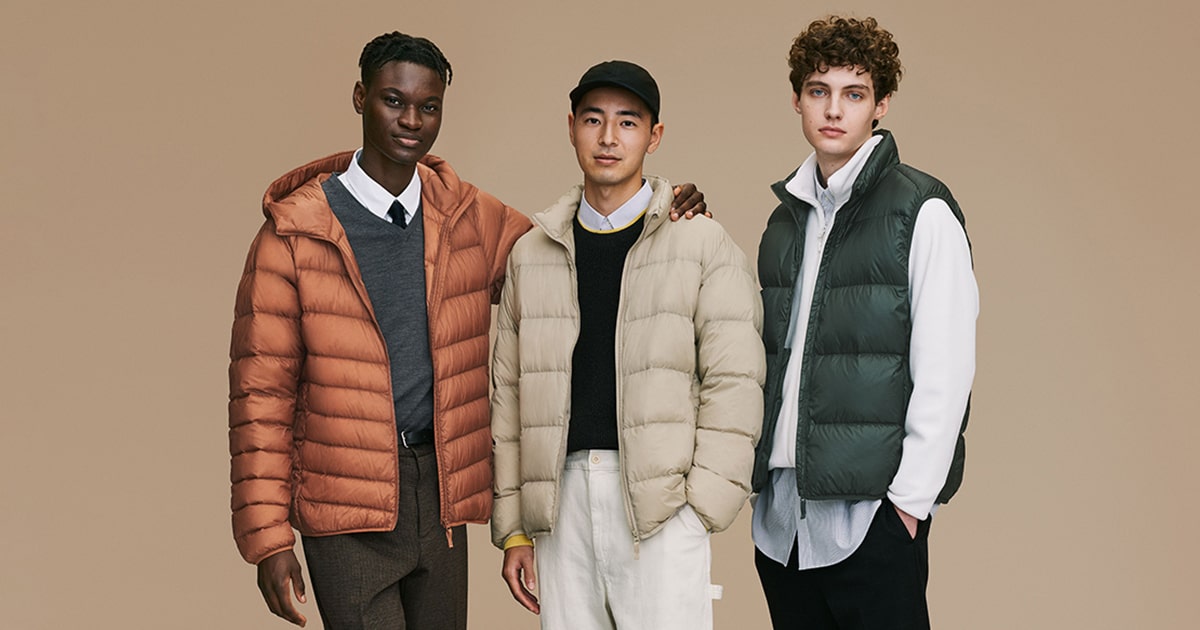
You’re standing in a terminal at JFK, or maybe you’re shivering in a drafty Tokyo cafe, and you see it. That specific, slightly shiny, horizontal quilting. It’s everywhere. Since its debut back in 2009, Uniqlo Ultra Light Down (often called super light down by the uninitiated) has basically become the unofficial uniform of the modern traveler. It’s the jacket you stuff into a tiny bag and forget about until the temperature drops ten degrees in an hour. Honestly, it changed how we think about winter layers. But after a decade of dominance, does it actually hold up against the technical gear from brands that cost four times as much?
It’s complicated.
Most people buy these jackets because they’re cheap and thin. They want the warmth of a parka without looking like the Michelin Man. Uniqlo pulled this off by ditching the "down pack"—that extra layer of fabric inside most jackets that keeps feathers from poking out. By injecting down directly into the nylon shell, they shaved off a massive amount of weight. It’s clever engineering. It’s also why you occasionally see a stray white feather floating away from your chest during a meeting.
The Science of 750 Fill Power
Let's talk about loft. When we say Uniqlo Ultra Light Down, we’re talking about a specific warmth-to-weight ratio. Uniqlo claims a fill power of 750 or higher. In the world of insulation, fill power is just a measurement of how much space one ounce of down occupies. The more space it takes up, the more air it traps. Air is the actual insulator. Your body heats the air, and the jacket just holds it there.
Is 750 good? Yeah, it’s actually great for the price point.
For comparison, a standard budget jacket might sit at 550. High-end alpine gear from brands like Arc'teryx or Patagonia often hits 800 or 850. So, Uniqlo is punching way above its weight class here. They use a mix of 90% down and 10% feathers. That 10% is necessary because feathers provide the structure that keeps the down from collapsing into a flat, useless pancake. If it was 100% down, the jacket would have no "spring."
The shell is made of a 10-denier or 20-denier nylon. Denier is basically the thickness of the individual threads. Ten is incredibly thin—think of it as being just a few steps away from a heavy-duty trash bag, but way more breathable. This thinness is exactly why you can roll the whole jacket up into a cylinder the size of a water bottle.
Water Resistance vs. Waterproofing
Here is where people get it wrong.
You see the "Durable Water Repellent" (DWR) tag and think you can walk through a London drizzle for an hour. Don't do that. DWR is a coating, not a membrane. It makes water bead up and roll off the surface, but it won't stop a soaking. If the down inside gets wet, you are in trouble. Wet down clumps. It loses its loft. When it loses its loft, it loses its ability to trap air. Basically, a wet Uniqlo Ultra Light Down jacket is just a heavy, cold, expensive rag.
If you're heading into a storm, this is a mid-layer. Stick a hardshell over it.
Why the "Super Light" Design Actually Works for Commuters
Most winter gear is built for the mountains. That’s fine, but most of us aren't climbing Everest; we're walking from the subway to the office. This is where the Uniqlo Ultra Light Down shines. It’s designed for "transitional" environments. You know that miserable feeling of being roasted alive on a crowded train because you're wearing a heavy wool coat? This jacket solves that. It’s breathable enough that you don't instantly sweat, and light enough to carry in your hand without feeling like you're lugging a dead weight.
Kinda genius, really.
The 2024 and 2025 iterations have also tweaked the fit. For years, the "boxy" cut was a major complaint. It looked like a rectangle with sleeves. Now, they’ve added more 3D-cut shoulders. This allows for a better range of motion. If you’re reaching up for a grab handle on a bus, the whole jacket doesn't ride up to your chin anymore.
The Sustainability Problem
We have to be real about the ethics of down. Down is a byproduct of the poultry industry. For a long time, the supply chain was murky. Uniqlo now adheres to the Responsible Down Standard (RDS). This means the feathers aren't coming from live-plucked birds or those subjected to force-feeding. They’ve also started a recycling program. You can actually take your old, ripped, or "leaky" Uniqlo Ultra Light Down back to the store. They strip the down out, clean it, and use it in new products.
It’s a step in the right direction. It’s not perfect—synthetic insulation is technically more "animal friendly"—but synthetic stuff also breaks down over time and loses its warmth faster than natural down.
Comparison: Compact vs. Wide Rib vs. Seamless
Walking into a Uniqlo store is overwhelming. There are roughly five different versions of this one jacket. Which one do you actually need?
- The Compact Vest/Jacket: This is the one with the V-neck option. It’s specifically designed to be hidden. You wear it under a blazer or a topcoat. It’s very thin. If you use this as your only jacket in January, you’re going to have a bad time.
- The Standard Jacket: This is the "classic." It has the horizontal stitching. It's the most versatile.
- The Seamless Down: This is a different beast entirely. Instead of stitching the sections, they use heat-bonding to create the baffles. Why? Because every stitch is a tiny hole where wind can get in and heat can get out. Seamless is significantly warmer and more wind-resistant. However, it’s bulkier. It doesn't pack down as small.
- The Parka: Just the standard jacket with a hood. The hood isn't structured, so it kind of flops around if you aren't wearing it, but it's a lifesaver in a sudden breeze.
Real World Performance: The "Three-Year Rule"
I've owned four of these over the last decade. Here is the truth: they have a shelf life.
Because the fabric is so thin, the friction of your arms rubbing against your sides eventually wears down the nylon. You'll start to see "pilling" or thinning in high-wear areas. Also, the DWR coating wears off. After about three years of heavy use, the jacket won't be as "puffy" as it used to be. The down shifts. You get "cold spots" where the feathers have migrated away from the shoulders or elbows.
You can extend the life by washing it correctly. Never, ever use regular detergent. Regular soap strips the natural oils off the feathers, causing them to go brittle and flat. Use a specialized down wash (like Nikwax). Throw it in the dryer on low heat with three tennis balls. The tennis balls act like little hammers, beating the clumps out of the down and restoring the loft.
If you just hang dry it, it will be ruined. Forever.
Is it still the best value?
Honestly, the market is crowded now. Amazon has their "Essentials" version, and brands like Quince are doing high-fill power jackets for similar prices. But Uniqlo still has the edge on the actual feel of the fabric. Many budget jackets feel like wearing a plastic tent. The Uniqlo Ultra Light Down feels more like fabric. It has a matte finish option that doesn't look like you're wearing a garbage bag, which is a massive plus if you're trying to look somewhat professional.
The biggest downside? Everyone has one.
I’ve been at parties where there are six identical navy blue Uniqlo jackets on the coat rack. It's the "Lost My Jacket" lottery.
Actionable Tips for Potential Buyers
If you’re looking to grab one, don't just grab your usual size. Uniqlo sizing is notoriously inconsistent between regions. A "Medium" in the US is often a "Large" in Japan.
- Size up for layering: If you plan on wearing a hoodie underneath, go one size up. The armholes are cut quite high and can get tight quickly.
- Check the "Matte" vs "Shiny": The shiny versions tend to be slightly more water-resistant because of the finish, but the matte versions look significantly more expensive.
- The "V-Neck" trick: Most of the compact jackets have buttons that allow you to fold the collar inward, creating a V-neck. This is perfect for wearing under a formal coat without the down jacket peeking out at the neck.
- Look at the cuffs: The newer models have a bound cuff that keeps wind from whistling up your sleeves. Make sure you get the version with the elasticated wrist.
Maximizing Your Investment
To get the most out of your Uniqlo Ultra Light Down, treat it as a tool.
Don't use it as your primary outer layer for heavy manual labor or hiking through thick brush. The 10D nylon will snag on a stray branch and rip instantly. It's a city jacket. It's a travel jacket. It's a "layering" piece.
When you store it at the end of the season, do not leave it in the tiny stuff sack. Keeping down compressed for months on end damages the structure of the feathers. Hang it up in a cool, dry place. Give it space to breathe. When the next winter rolls around, give it a quick five-minute tumble in the dryer on "air fluff" to wake the feathers up.
Ultimately, the reason this jacket stays relevant isn't because it's the warmest or the most durable. It's because it's "good enough" for 90% of situations. It handles the commute, the chilly flight, and the unexpected autumn cold snap with zero drama. Just watch out for those stray feathers.
Next Steps for Long-Term Care
- Inspect the Seams: Every six months, check for "down leakage." If you see a feather poking out, do not pull it. Pulling it makes the hole bigger. Reach from the inside of the jacket and pull the feather back in.
- Restore Water Repellency: If water stops beading on the surface, use a spray-on DWR treatment after a wash to bring back that initial weather resistance.
- The Storage Rule: Always store the jacket on a wide-shouldered hanger rather than a wire one to maintain the shape of the 3D-cut shoulders.